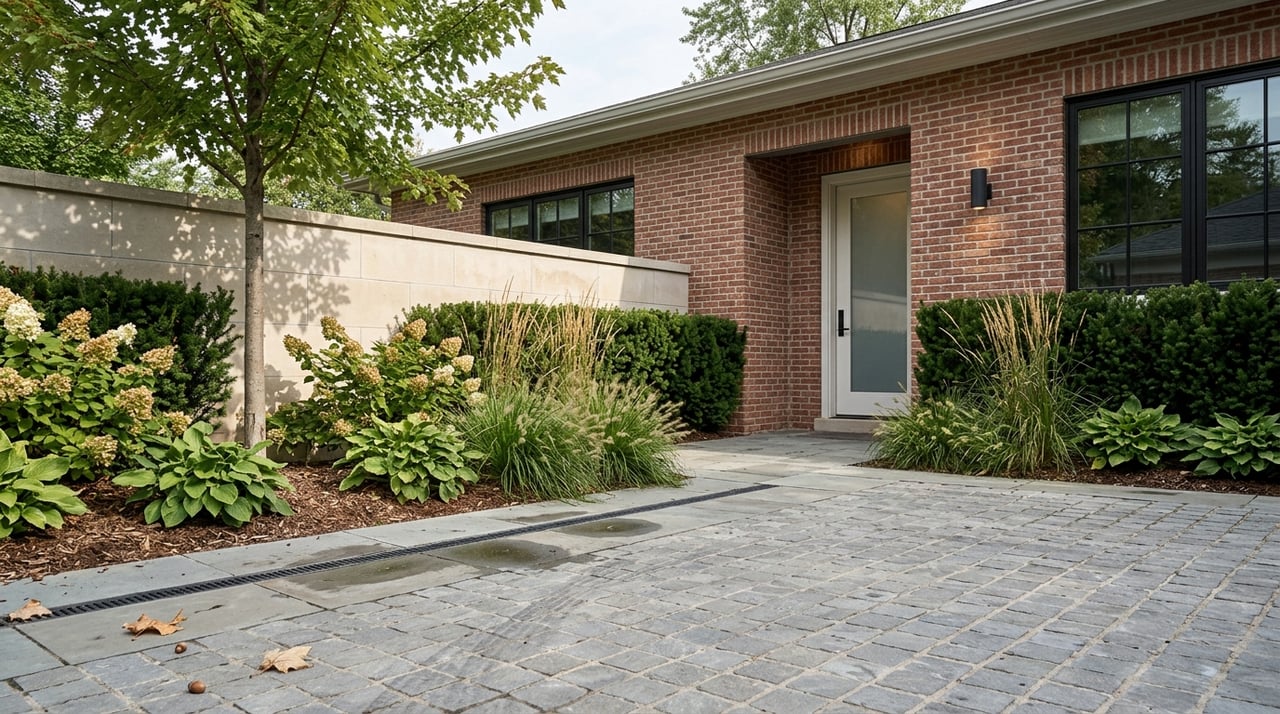
Wondering what “private” really means when you shop for homes in Carmel? In this market, privacy can look very different from one community to the next. You may be comparing gates, larger lots, HOA rules, club amenities, and access policies all at once. This guide will help you sort through those differences so you can buy with more clarity and confidence. Let’s dive in.
What private living means in Carmel
In Carmel, privacy-focused housing is not limited to one type of neighborhood. The city’s development pattern includes higher-density corridors alongside more traditional suburban neighborhoods, so privacy tends to show up in a few different forms.
That usually means you are not just evaluating whether a neighborhood has a gate. You are also looking at lot size, landscaping buffers, HOA oversight, community amenities, and how access is managed for residents and guests.
Carmel is also a higher-income suburb with a strong corporate presence. The city reports more than 130 corporate headquarters, a median household income of $118,000, and 70% of residents with a bachelor’s degree or higher. That context helps explain why the local market includes a range of privacy-oriented options, from estate communities to club-centered neighborhoods.
The main private community types
If you are searching for a Carmel gated community or a more secluded neighborhood feel, you will likely run into a few distinct categories. Each offers privacy in a different way.
Gated estate communities
Some of Carmel’s most privacy-focused neighborhoods rely on controlled entry plus larger homesites. In these communities, privacy often comes from the combination of gates, distance between homes, lakes, and mature landscaping.
Bridlebourne describes itself as a gated community of more than 100 acres with two lakes, mature trees, and 67 estate homes on 1 to 3 acre lots. Summerlakes says it spans 140 acres, includes more than 18 acres of lakes and 9 acres of green space, and contains 89 homes on lots larger than an acre.
Asherwood is another example of this category. It is being marketed as 40 private 1-acre lots in a gated setting with mature trees, and tours are scheduled by appointment only.
Club-centered private communities
In some Carmel communities, privacy is tied less to lot size and more to a managed lifestyle setting. The Bridgewater Club is described as a private club community, with its own site highlighting golf, wellness, racquet sports, dining, aquatics, and community programming.
If this type of neighborhood appeals to you, it helps to separate the residential setting from the lifestyle offering. The sense of privacy may come from private-club structure, controlled access, and community management rather than from estate-scale spacing alone.
HOA-managed neighborhoods with private feel
Not every privacy-minded buyer needs a gate. Some neighborhoods create a more protected, resident-focused feel through HOA services, rules, and shared amenities.
Springmill Ponds offers a useful example. It is a 229-home Carmel community with a pool, courts, playground, ponds, social events, landscaping and common-area maintenance, architectural review, and password-protected resident resources.
In a neighborhood like this, privacy may feel more practical than dramatic. You may value managed common areas, resident-only resources, and consistent upkeep even without a formal gate.
Five questions to ask before you buy
The best way to compare Carmel private communities is to use a simple framework. Instead of asking whether one neighborhood is “better,” focus on how each one creates privacy and what that means for your daily life.
1. What creates the privacy?
Start with the source of privacy. Is it a gate, a larger lot, mature trees, lakes, setback distance, HOA structure, or a mix of several features?
In Carmel, “private” usually means a combination rather than a single feature. A gated entrance may matter, but lot width, landscaping, and neighborhood layout can matter just as much once you are actually living there.
2. Who controls access?
Access control can vary more than buyers expect. Some communities rely on a gated entrance, while others add appointment-only practices or tighter visitor coordination.
This matters not only for your own comfort, but also for deliveries, guests, service providers, and future resale showings. Carmel’s residential inspection procedures even note that gate or lockbox codes should be provided in advance, which is a good reminder that controlled-access neighborhoods require more planning.
3. What does the HOA maintain?
An HOA can support privacy by maintaining landscaping, common areas, amenities, and architectural standards. It can also shape how consistent the neighborhood feels over time.
That said, HOA involvement is not one-size-fits-all. One community may focus on landscape maintenance and amenities, while another may be more centered on estate appearance, exterior review, or access coordination.
4. Which amenities are truly included?
Amenities can strongly shape your experience, but buyers should clarify what is actually part of ownership. A private-club setting may offer a different experience than a neighborhood with ponds, green space, or a pool.
The practical question is simple: which amenities will you actually use, and what role do they play in your sense of privacy and convenience? If you want more space and fewer shared touchpoints, an estate-lot setting may fit better. If you want a managed lifestyle with recreation and dining, a club-centered community may be more appealing.
5. How much future flexibility do you have?
This is one of the most important questions in Carmel. HOA rules can affect your ability to make exterior changes, adjust fencing, or use the property as a rental in the future.
Carmel’s rental registration program took effect on February 1, 2026. It applies to residential rentals of single-family dwellings and attached single-family townhomes, excludes condominiums, and allows HOAs to maintain stricter rental limits than the city’s baseline rules.
Carmel rules that affect privacy
Even in a private community, city rules still shape what you can do with your property. That is why it helps to review both HOA documents and Carmel regulations before you move forward.
Fence limits matter
If you are hoping to add fencing for more seclusion, be aware of local code limits. In Carmel, residential fences in required side or rear yards generally cannot exceed 6 feet, and other residential fences in the buildable area generally cannot exceed 9 feet.
That means your sense of privacy may depend more on lot design and landscaping than on tall fencing alone. For many buyers, this becomes an important factor when comparing older estate neighborhoods with mature tree cover versus newer homesites.
Exterior storage affects curb view
Carmel also requires residential refuse containers to be kept out of view from the street or stored in a garage. It may sound like a small detail, but rules like this can support a more orderly and visually consistent streetscape.
For buyers who value a polished neighborhood feel, these standards are worth noting. They may not create privacy directly, but they can affect how private and well-managed a community feels day to day.
How to compare Carmel communities side by side
When you tour homes, it helps to evaluate communities with the same checklist. This keeps you focused on the factors that matter most to your lifestyle instead of getting distracted by a beautiful entry or a single standout amenity.
A practical comparison checklist
- What physical features create privacy in this community?
- Is access controlled by gate, HOA policy, appointment process, or none of the above?
- How close are neighboring homes, and how much tree cover or open space exists?
- What does the HOA maintain, review, or restrict?
- Are there rental limits beyond the city’s baseline rules?
- Which amenities are included, and how often would you use them?
- How easy is it to manage guests, deliveries, inspections, and contractors?
- Would this community still fit your needs if your lifestyle changes in a few years?
Why showing logistics matter even for buyers
Privacy-sensitive buyers often focus on daily living, but resale strategy matters too. If you buy in a controlled-access or privacy-first neighborhood, future showings may require more coordination.
That can include advance access planning, verified buyers, and more selective appointment scheduling. For sellers who value discretion, these steps can help limit unnecessary exposure while still supporting a well-managed sale process.
NAR’s Safe Listing Form supports removing valuables, mail, personal papers, medications, and firearms from view, and it supports showings only to buyers who are pre-qualified or otherwise verified. In practice, that aligns well with the needs of privacy-minded homeowners in Carmel.
HOA communication can be part of the value
Some buyers think only in terms of gates and lot lines, but communication structure can matter too. Carmel Police publishes a quarterly newsletter called Partners in Protection for HOAs and local businesses, including crime statistics and prevention tips.
For you as a buyer, that suggests HOA-based communication and neighborhood coordination are part of Carmel’s local landscape. In some communities, that kind of organized communication can add to the sense of order, awareness, and resident connection.
Choosing the right fit for your lifestyle
The best Carmel private community is not the one with the biggest entrance or the most amenities. It is the one that matches how you want to live, host, travel, and manage your home over time.
You may prefer a gated estate neighborhood with larger lots and natural buffers. Or you may want a club-centered setting, or an HOA-managed community that offers a more structured and low-maintenance experience.
The key is to look past the word “private” and ask what that privacy actually looks like in daily life. When you do, you can compare Carmel communities more clearly and choose with much more confidence.
If you are exploring gated or privacy-focused homes in Carmel, working with a local agent who understands access logistics, HOA nuances, relocation timing, and discreet representation can make the process much smoother. To start a confidential conversation, connect with Tina Smith.
FAQs
What types of private communities can buyers find in Carmel?
- Buyers in Carmel will typically see gated estate communities, private club-centered communities, and HOA-managed neighborhoods that create privacy through rules, maintenance, and resident-only features.
What should buyers ask about Carmel HOA rules before purchasing?
- You should ask what the HOA maintains, what exterior changes require approval, whether rental limits are stricter than city rules, and how access, amenities, and community standards are managed.
How do Carmel fence rules affect privacy for homeowners?
- Carmel code generally limits residential fences in required side or rear yards to 6 feet and other residential fences in the buildable area to 9 feet, so privacy often depends on lot layout and landscaping too.
What should buyers know about Carmel rental rules in private communities?
- Carmel’s rental registration program took effect February 1, 2026 for single-family dwellings and attached single-family townhomes, excludes condominiums, and HOAs may still impose stricter rental limits.
Why do showing and access logistics matter in Carmel gated communities?
- Controlled-access neighborhoods often require advance planning for buyers, inspectors, contractors, and future resale showings, including gate or lockbox coordination and more managed appointment scheduling.
How can buyers compare gated communities in Carmel more effectively?
- A strong approach is to compare what creates privacy, who controls access, what the HOA maintains, which amenities are included, and how much flexibility you will have for future changes or rentals.