Most Carmel sellers brace for the wrong delay. They expect the buyer's lender to slow things down, or an appraisal to come in soft, or a home warranty request to eat up a few days of back and forth. Those are the contingencies everyone talks about. The one that has actually reopened the most contracts across Hamilton County this year rarely comes up until it's sitting in a canister in the basement: the radon test.
That test matters more right now than it would have a few years ago, and not because radon levels have changed. Hamilton County sits inside the EPA's highest radon risk classification, the same zone it has always been in. What's changed is the size of the window a seller has to absorb a surprise. Carmel homes have been going under contract in a matter of weeks this year, and a schedule that tight has almost no slack for a mid-contract renegotiation over a mitigation system nobody planned for.
The math behind a fast Carmel closing
Recent multiple listing service data for Carmel puts homes going under contract anywhere from about 18 days, tracking the three months ending in April 2026, to the low 30s by August 2026, depending on the source and the week you check. In the luxury segment specifically, one analysis of Hamilton County sales completed between February and May 2026 found homes averaging just four days to contract. However you slice it, the pattern holds: Carmel is not a market where a seller has weeks of buffer to spare once an offer is accepted.
That buffer matters because a standard closing in Indiana runs 30 to 45 days from contract to keys, faster for cash deals. A radon result that comes back elevated in week two doesn't just add a line item to the negotiation. It adds days to a calendar that was already built around speed, at the exact moment a seller has the least leverage to push the timeline back.
What sits at 4.0 pCi/L means for a Carmel basement
The EPA recommends fixing a home at or above 4.0 pCi/L and considering mitigation between 2.0 and 4.0. Local testing companies working in Hamilton County report average readings for Carmel homes landing right around that 4.0 threshold. Statewide, a 2026 guide to selling a home in Indiana puts the share of Indiana homes testing above the action level at roughly 40 percent. At least one Hamilton County mitigation company goes further, reporting that closer to one in three homes it tests in Westfield and Carmel average nearer to 7.0 pCi/L, well above the point where the EPA recommends action.
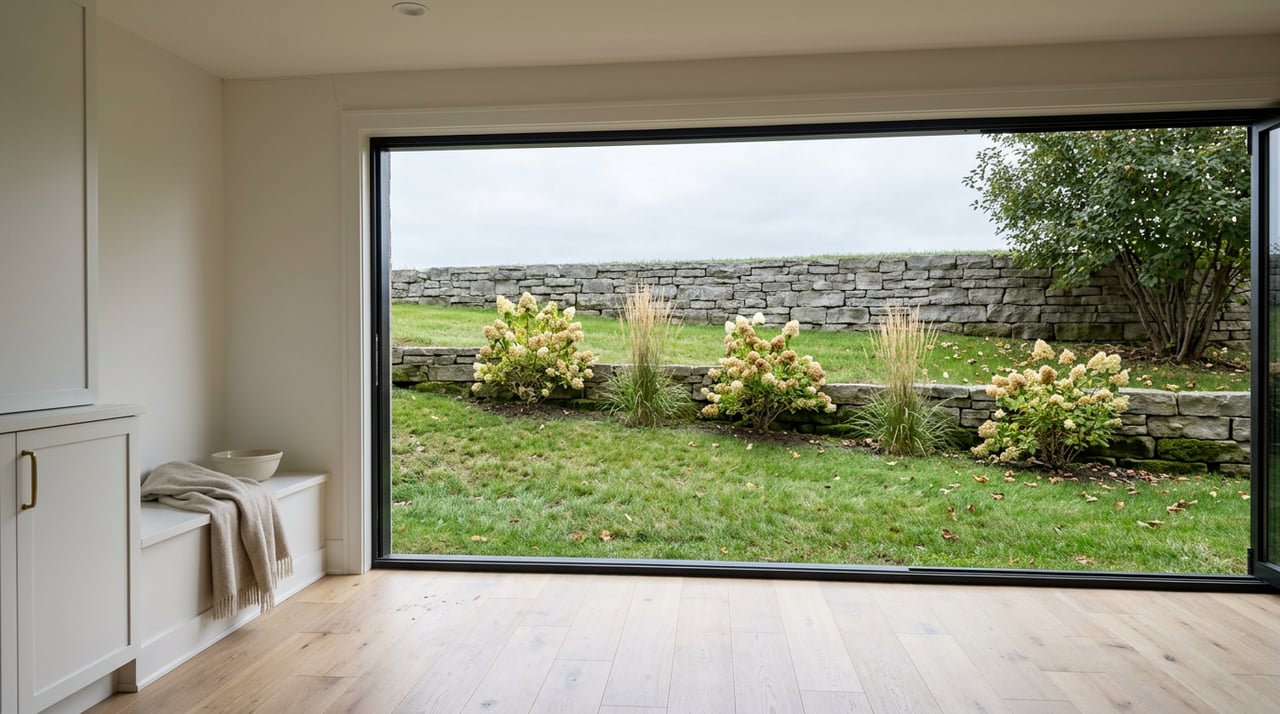
There's a reason this shows up more in Carmel than it might elsewhere in the country. The area's housing stock is built predominantly with full basements, and a full basement is exactly the kind of enclosed space where radon gas collects once it seeps up through the soil. First-quarter 2026 data put the average price for a Carmel single-family home with a basement at roughly $731,000, compared with about $456,450 for one without. That's not a small gap, and it means the priciest, most basement-heavy homes in Carmel, the ones most likely to belong to a move-up buyer or an executive relocation, are also the ones most likely to need a second look at their radon number before they close.
A basement renovation photographs well for a listing. A radon mitigation system rarely makes it into the photos at all, and that's exactly the problem.
What the disclosure form actually requires
Every Indiana seller of a one-to-four-unit property has to complete the Seller's Residential Real Estate Sales Disclosure, the state's standard sales disclosure form, and deliver it to the buyer before an offer is accepted. The form's hazardous conditions section is where radon shows up, and it's governed by Indiana's administrative rules on residential disclosure.
Here's the nuance most sellers miss. The form only asks for a seller's current actual knowledge. It does not require an independent test. A seller who has never checked their radon level isn't lying by leaving that box blank, and Indiana law generally shields sellers from liability for honest gaps as long as they weren't negligent and didn't have actual knowledge of a problem. But if a seller has tested, knows the number, and leaves it off the form anyway, that's the scenario that has produced fraud claims in Indiana courts, including the frequently cited case of Wise v. Hays from 2011.
The gap between legally clean and schedule-safe is the entire point here. Not testing keeps a seller off the hook on the disclosure form. It does nothing to keep the calendar from slipping once the buyer's own inspector runs a test during the contract period and the number comes back high.
The three numbers worth knowing before you list
- A short-term radon test typically costs $150 to $250, and it's often already bundled into a buyer's standard home inspection rather than billed as a separate line item.
- A mitigation system, when one is needed, runs $800 to $2,500 depending on the size of the home and the specific site conditions underneath it.
- The cost of finding this out after the appraisal and financing are already locked in isn't measured in dollars. It's measured in the days it adds back onto a closing calendar that had almost none to spare in this market.
Testing before listing turns an unknown into a known, on the seller's schedule instead of the buyer's. If the number comes back clean, that's one less thing a buyer's inspector can use to reopen negotiations. If it comes back elevated, a seller has time to install a system, get it verified, and fold the cost into pricing before the home ever goes live, rather than scrambling to find a contractor with the closing clock already running.
Who's already treating this as routine
This isn't a fringe precaution. Several Hamilton County inspection firms, including Security Home Inspections, AllCheck Inspections, and WIN Home Inspection, offer radon testing as a standard add-on to a general home inspection for Carmel buyers. Dedicated mitigation companies such as Healthy Radon Solutions and Radon Environmental Inc. operate specifically within Hamilton County's Zone 1 footprint, which tells you how often this request already comes up on the buyer side. A seller who skips testing isn't avoiding the issue. They're just choosing to learn the answer later, from someone else's inspector, on someone else's timeline.
None of this changes how Carmel's market behaves. Homes will keep moving fast, and buyers will keep asking for the same handful of tests every time. The only real choice a seller has is whether to find out the radon number on their own schedule, before the sign goes in the yard, or on the buyer's schedule, in the middle of a contract with days already ticking away.
A few questions sellers ask
Does Indiana require sellers to test for radon before listing? No. State law requires completing the sales disclosure form based on what a seller currently knows. It doesn't require an independent radon test, which is exactly why so many sellers go to market without one.
What happens if a buyer's radon test comes back elevated after the home is already under contract? It typically becomes a point of negotiation rather than an automatic deal-breaker. Many contracts allow the buyer to request mitigation or a credit toward one. Either path adds time to a closing calendar that already has little room to spare in Carmel's current market.
Is testing before listing worth it for a home that's likely to sell quickly anyway? Given that Hamilton County sits in the EPA's highest radon zone and a test costs a fraction of what mitigation runs, testing ahead of time gives a seller the option to address the issue quietly, on their own terms, instead of mid-contract.
A pre-listing radon test costs less than a single day of professional staging and buys back the one thing a fast market doesn't hand out for free: time. If you're weighing when to test, what else belongs on a pre-listing checklist for a Carmel home, or how a mitigation system might affect your marketing timeline, Tina Smith can walk through the specifics for your address and your calendar.