"You should be able to walk to your doctor, your dentist, your bookstore, your hardware store, and your bank." Jeff Terp, a longtime Village of WestClay resident and former executive director of its owners association, described the plan's original intent that way to Forma this summer, 25 years after the first homes went up at Main Street and Towne Road.
This fall, that standard is useful for a different reason. Two builders have proposed luxury neighborhoods right at the Village's edges. One of them sits on land the Village surrounds. Neither is expected to become part of WestClay. Once those plans are built, a buyer will have three ways to live near the Village. The proposals already show what the Village's long-running price premium has paid for. Buyers have been paying for a walkable commercial core and streets that hold their historic character, and a homesite nearby is about to become available without either.
The premium, read against what is inside
According to figures the owners association gave the Indianapolis Business Journal for its story on the Village's 25th anniversary, homes in the Village sold for an average of $223 per square foot in the year before the story ran. The averages were $204 for Carmel as a whole and $190 for Hamilton County. That works out to about 9% over the rest of Carmel.
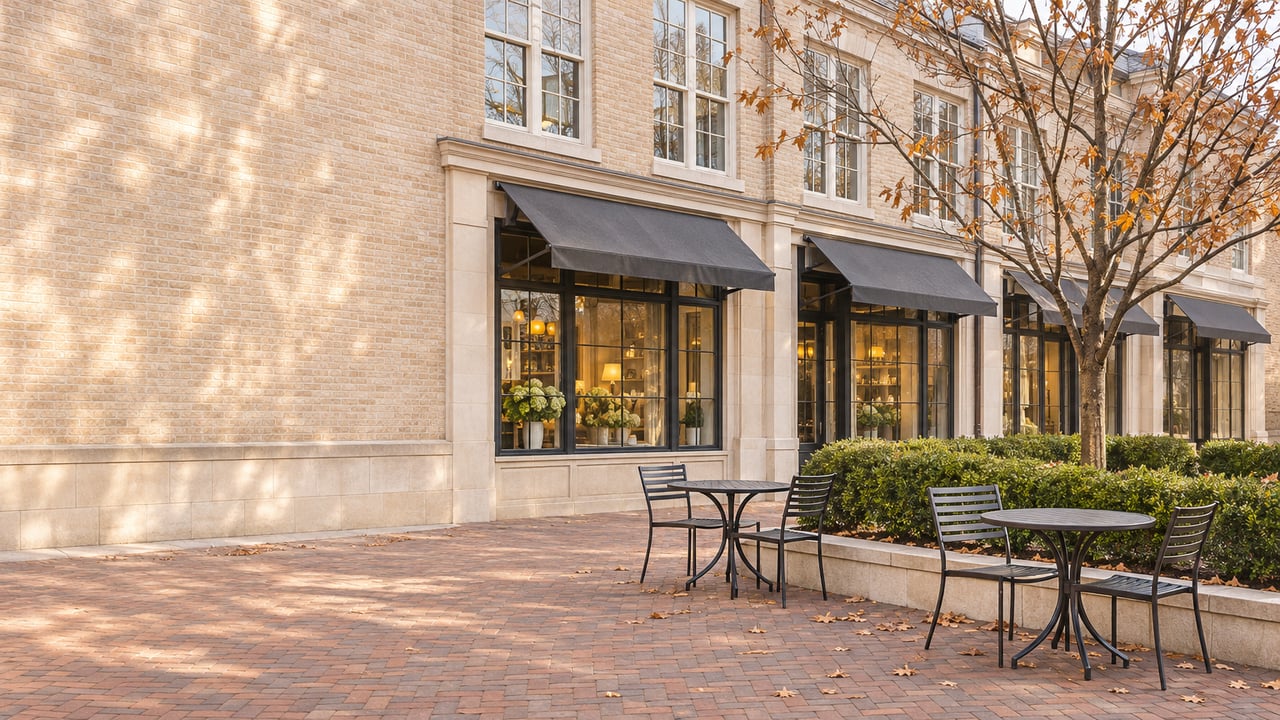
Much of that premium goes to the commercial district. IBJ reported that about 254,800 square feet of office, retail and restaurant space is split between two areas. The Village Center sits in the neighborhood's core and was built for pedestrians. Uptown, at the southwest corner of Main Street and Towne Road, is easier to reach by car. Together they hold more than 100 businesses. The owners association's merchant directory covers everyday errands and evenings out alike. It lists Benge's Ace Hardware, CVS, Chase Bank, MacArthur Books, Kincaid's Meat Market, Zing! Cafe, Fundae's Ice Cream & Sweets, Greek's Pizzeria, Puccini's Pizza and Pasta, Q's Wine Bar, Sahm's Ale House and Danny Boy Beer Works.
The core took a long time to work. IBJ reported that the commercial district struggled to get going for nearly 15 years, through two recessions and a banking crisis. For the anniversary story, builder David Klain told the paper the Village Center was 100% leased and occupied. He said it draws people from about four miles away to Sahm's, Danny Boy and the neighborhood branch of the Carmel Clay Public Library. Forma noted that a large grocery store planned for the area was never built, and that part of the plan shifted toward restaurants and services instead.
Shared grounds make up the rest of what the premium covers. Brenwick, the developer, spent $18 million on amenities, according to IBJ. The association lists the three-story Greek Revival Meeting House, three pools and 25 ponds. Its amenities page adds the Goldwater, Provost and Webster clubhouses, ponds where fishing is allowed, Founders Corner, MacArthur Field, Clark Woods, Settlers Legacy and Webster Park and Wetlands. Forma reports more than six miles of trails. The parks were laid out so that every home is about a seven-minute walk from green space.
The part of the premium you agree to keep up
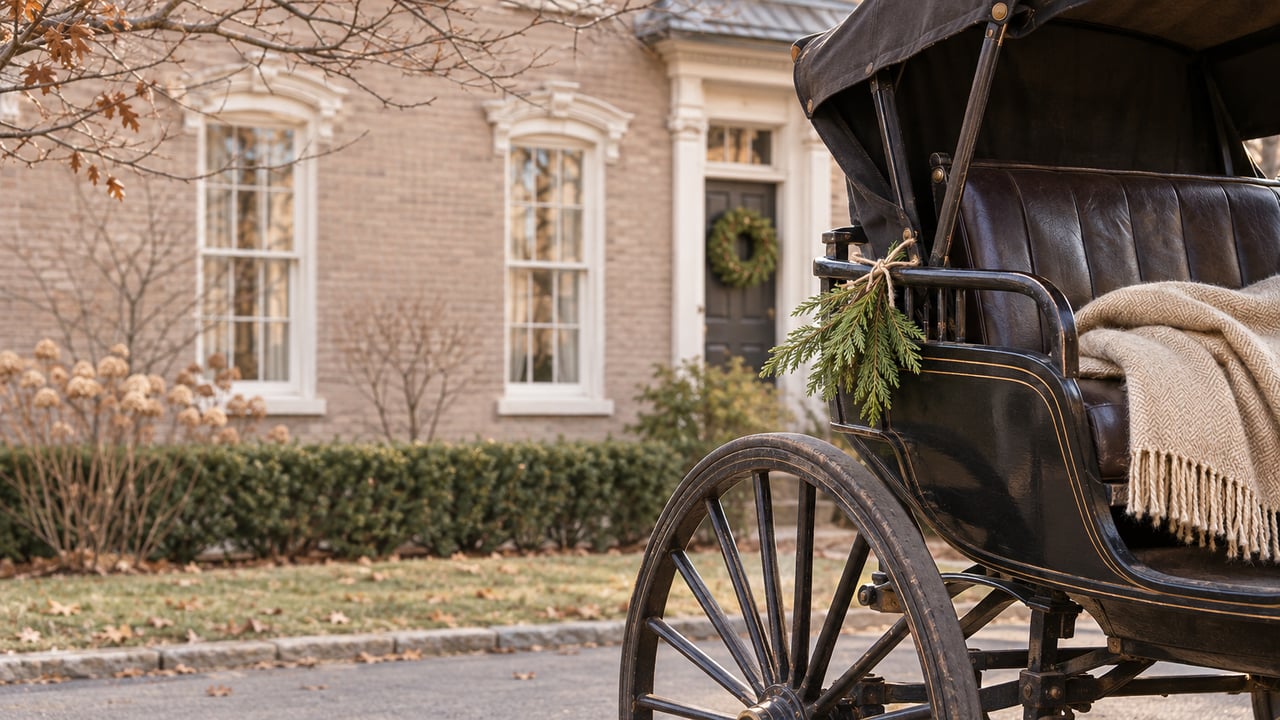
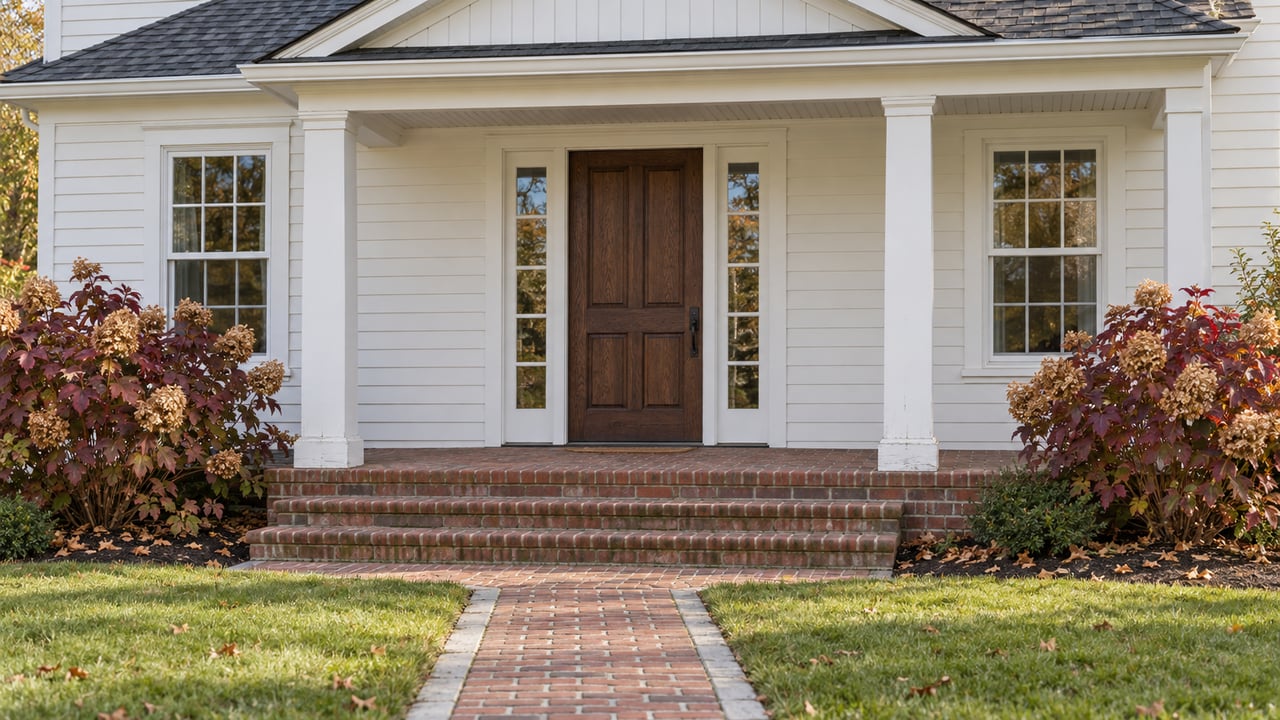
The other half of the price is consistency, and owners pay for it with more than money. Across 17 neighborhoods, Village homes follow Indiana styles from the late 1800s through the early 1900s, including Victorian, Georgian and Gothic. Garages sit behind the houses, porches face the street, and homes stand close to the sidewalk.
Forma credits that consistency to active stewardship by the Village's Architectural Review Board, which includes a professional architect along with resident members. Terp told the magazine that a group that toured WestClay in its early years came back decades later and remarked that the Village had kept its original character. When a buyer pays the per-square-foot premium, that kept character is part of what the money buys. A buyer with exterior projects in mind should talk with the association before making an offer. A house that is already the way you want it may be worth more to you here than the same house would be in an ordinary subdivision.
Owners also pay an annual association assessment. It funds taxes, insurance and upkeep on the common areas, along with landscaping, utilities, renovations and staff. The association does not publish a dollar figure and refers questions about a specific property to its office. A buyer comparing a Village home with one next door should ask for that number early. It belongs in the comparison just as much as the list price.
Two proposals that sit beside the Village
The first edge project is Hampstead. Current in Carmel reported in June that Christopher Scott Homes had proposed 36 maintenance-free homes of three and four stories. They would sit on 9 acres north of W. Main Street and west of Dumbarton Street, replacing two existing homes. The site is surrounded by residential property and is not expected to join the Village. The filing described homes at $1.5 million to $2 million, with elevators, rooftop terraces and optional attached garages, plus a pocket park and a pond with a fountain. In the same article, Lori Wheeler of Christopher Scott Homes said buyers who want maintenance-free living "are leaving Carmel to find comparable housing options in neighboring markets."
Hampstead has changed since then. At the July 21 Plan Commission hearing, neighbors raised concerns about density, traffic, mature trees and the wooded corridor along Elliott Creek, as Current in Carmel reported. On Sept. 1 the builder showed the committee a revised plan for 30 homes with an engineered pond of about 0.9 acre and more open space. The committee tabled the proposal on Oct. 6 and again on Nov. 5. Its next scheduled review is the Dec. 1 committee meeting.
The second is Clayshire. Current in Carmel reported in August that M/I Homes plans 53 homes on 37 acres at the southeast corner of Towne Road and 126th Street, designed by the Carmel firm Studio M and expected to sell for $900,000 to $1.3 million. An existing estate modeled on Colonial Williamsburg architecture would stay as the neighborhood's centerpiece. The plan includes one gathering area with a fire pit and another with a gazebo. On Nov. 5 the Plan Commission's committee voted 7–0 to recommend approval. The applicant's commitments included a 10-foot trail and 20-foot buffers. The full Plan Commission and then the City Council still have to act on it.
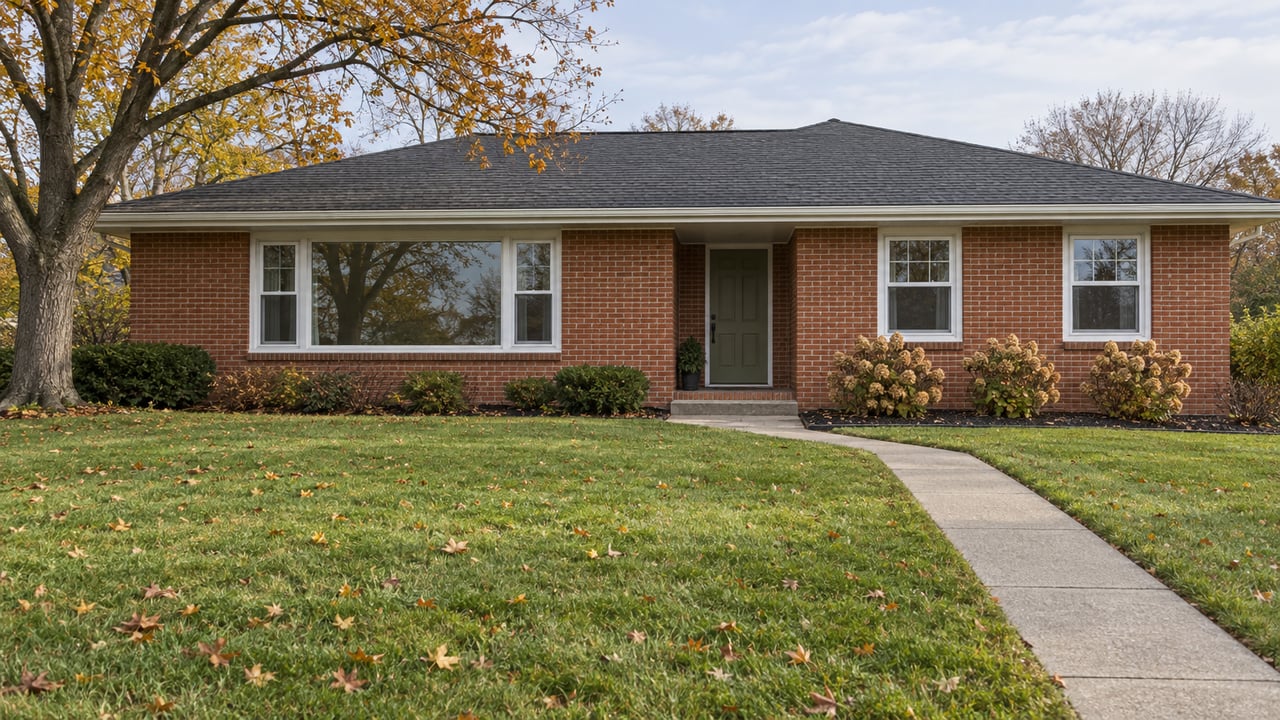
Put next to the Village, the two proposals separate what the Village has bundled together. Hampstead offers the same Main Street address with no exterior upkeep, at a price set for buyers who want to give up yard work. Clayshire offers new construction on larger common grounds a short drive from the Village Center. Neither one gives its owners the 17 neighborhoods of historic architecture or the review board behind them. Neither one puts a hardware store and a bookstore inside the neighborhood itself.
| Option | What it offers | Status as of late November 2026 |
|---|---|---|
| Village of WestClay | Walkable Village Center and Uptown, Meeting House and three clubhouses, architectural review | Built out over 25 years, about 1,840 residences |
| Hampstead | Maintenance-free homes of three and four stories, $1.5M to $2M as filed | Revised to 30 homes; committee review set for Dec. 1 |
| Clayshire | 53 new homes, $900K to $1.3M as filed | Committee recommended approval Nov. 5; full commission and council still to act |
The Village's 1,840 residences come from IBJ's count, and they range from apartments and senior living to estate homes. That mix gives the Village one more difference from its new neighbors. Hampstead and Clayshire each center on a single price band. The Village has housing at many sizes inside the same plan.
What the county numbers say about this winter
Both edge projects are still proposals, so a buyer deciding this season is choosing among homes already standing. The countywide numbers favor taking time over that choice. The Indiana Association of REALTORS' Hamilton County report for October 2026 shows average daily inventory of 1,283 homes for the month, up 14% from October 2025. Months of supply rose 11% to 2.3. Closed sales fell 20% year over year to 484 for the month, and the median sale price rose 2% to $455,000. The median home still went from listing to pending in 23 days in October, the same as a year earlier.
Taken together, those figures describe a market with more homes to choose from and fewer sales, where prices are holding and well-priced homes still move in about three weeks. That gives a buyer room to ask what a Village home's per-square-foot premium is paying for, and to weigh it against the new options proposed next door. Our Carmel housing market notes and the Carmel neighborhood page cover the wider city. Buyers drawn to Hampstead's maintenance-free model can compare it with Carmel's other lock-and-leave options.
A few quick answers
Will Hampstead or Clayshire homeowners belong to the Village of WestClay association? Current in Carmel reported that Hampstead is not expected to become part of the Village, and Clayshire was filed as its own planned unit development with its own common areas.
Is the Village's commercial district finished? In its anniversary story, IBJ reported that the Village Center was fully leased. David Klain, who owns the last 4.5 acres of commercial land there, told the paper that construction on that parcel was expected to begin later that year.
Who built the Village's homes? IBJ reported that nearly 50 homebuilders worked in the Village under its architectural requirements, after Brenwick took the first custom builders to Savannah and Charleston to see the kind of streets it wanted.
If you are deciding between a Village of WestClay home and one of the new options beside it, Tina Smith can help you get the association assessment, the review board history on a specific house, and the current sales for the street you are considering, so you can see what the premium covers before you make an offer. Request a Private Consultation, and we will start with the homes on your short list.